
Build a DIY milling machine
DIY CNC Router
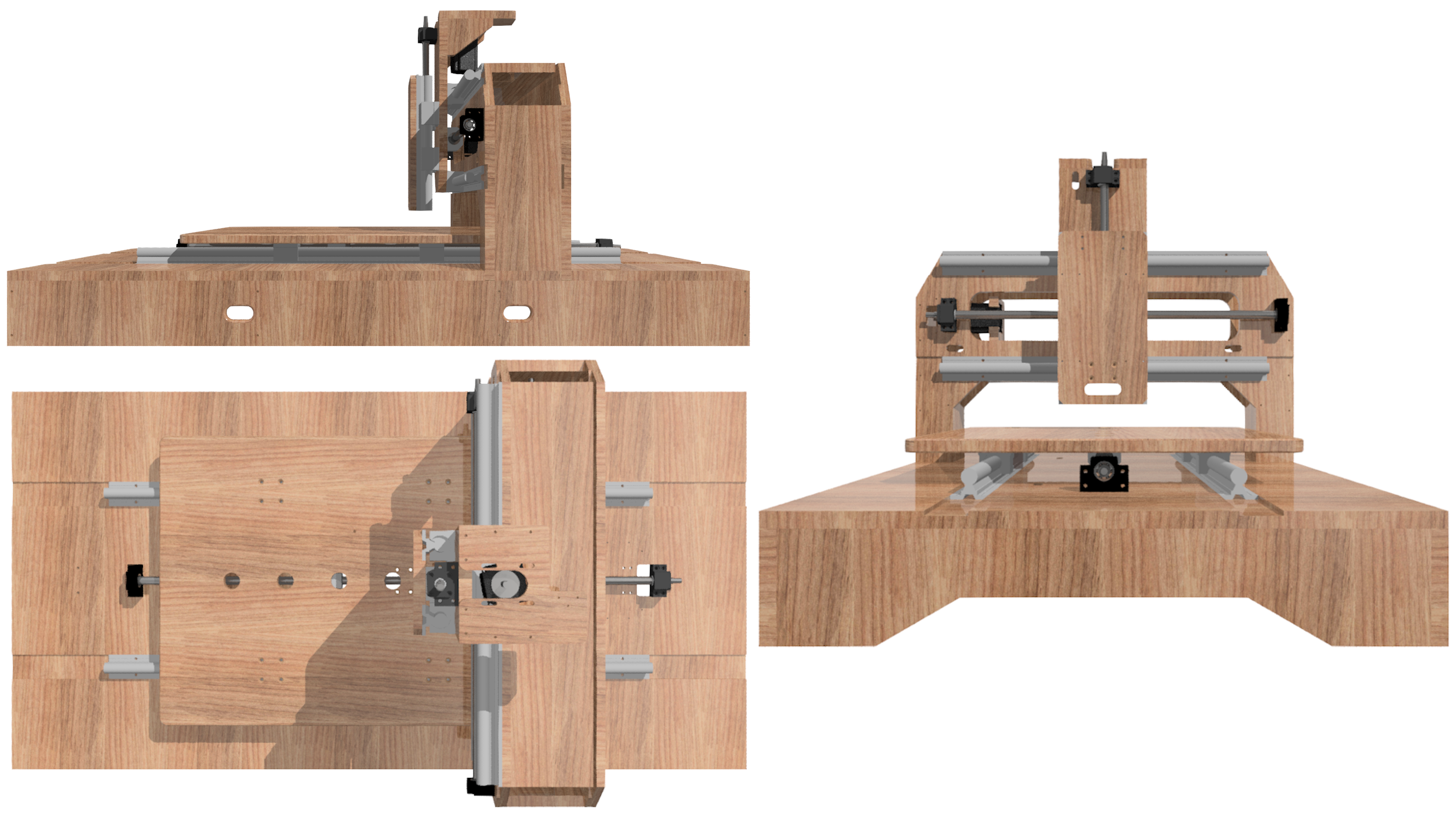
Contents
| Planning and building a DIY CNC router | Page 1 |
| Why build a CNC router at all? | Page 1 |
| Important questions you need to answer for yourself. | Page 1 |
| 0. Preface | Page 2 |
| 1. Material | Page 2 |
| 2. Travel ranges | Page 2 |
| 3. Drive | Page 2 |
| 4. Control | Page 2 |
| 5. Construction type | Page 2 |
| Drive types and linear guides | Page 3 |
|
Pros and cons of the individual drives |
Page 3 |
|
Linear guides |
Page 3 |
Planning and building a DIY CNC router
When you look into a DIY CNC router for the first time, the flood of information can be overwhelming. On closer inspection, though, it’s not nearly as hard as it seems at first.
There are high-quality and affordable components that simply need to be assembled in the right arrangement — and then the CNC fun can begin.
Why build a CNC router at all?
This has nothing to do with craftsmanship anymore!
If you prefer traditional craftsmanship, you’re of course on the right track — but CNC doesn’t take away skill; it expands what’s possible and comes with some very practical advantages.
CNC routing really shines especially where repeatability, time savings, and complex geometries matter:
-
Repeatability instead of “every part is one of a kind”
Once a part fits, you can make it exactly the same again — even weeks later. That’s ideal for small series, replacement parts, or when you keep developing a project without starting from scratch. -
Complex contours without a battle of nerves
Radii, pockets, internal cutouts, lettering, inlays, or precise joinery are possible by hand, but often involve lots of template work and finishing. CNC handles it cleanly and consistently. -
Saving time where it counts
The machine doesn’t take away the “fun of building” — it mainly removes monotonous work: identical hole patterns, recurring cutouts, long contours. You can put that time into design, fine finishing, surfaces, or the actual project. -
Precision you can stack
Especially in assemblies, accuracy pays off: when parts need to match (tongue/groove, fits, templates, jigs), CNC makes things more predictable. Less “close enough,” more “fits right away.” -
Digital planning = less material waste
With drawing/simulation you can see beforehand whether something collides, whether dimensions are correct, and what the part will look like in the end. That reduces failed attempts — especially with expensive material. -
New applications: engraving, labeling, front panels, mold making
CNC is not only “milling,” but also engraving, chamfering, 3D reliefs, making gauges and templates — things you’d otherwise outsource or not do at all. -
A tool, not a replacement for skill
Even with CNC you still need an understanding of material, workholding, cutters, feeds and speeds, and strategy. If you have that, you get repeatable results — if you ignore it, you’ll still produce scrap. CNC is more a “precise helper” than a “magic box.”
Bottom line: craftsmanship stays craftsmanship — CNC is simply an additional option to solve certain tasks faster, more accurately, and more reliably. And that’s exactly the appeal: you decide when you want to enjoy hand work and when the machine takes over the repetitive grind.
Important questions you need to answer for yourself.
Material?
Travel ranges?
Drive?
Control?
Construction type?